Frequently Asked Questions
In less than 5 minutes, it's possible to complete the checkout, configure your account, and be ready to broadcast notice to your employees.
ComplyLine acts as an intermediary between an organization and its employees. By using cutting edge transcription technology, the reporter is freed from the concern that their voice could be recognized on a voicemail or by a caller ID. And filing a report on the ComplyLine web portal, we eliminate the possibility of tracing an employee’s email.
Yes! The application allows the configuration of multiple sites (locations) and configurable site access by user. At the highest level, account administrators oversee all sites, users, site access, and can see all events within the organization.
Currently, anonymous reports can be submitted via an online form or by phone.
It's not uncommon for in-house systems to have low utilization rates, however, it's due to a fundamental lack of protections for the reporters. Voicemail boxes leave potentially traceable audio or caller ID, lockboxes are often in public areas where submissions can be observed by other employees, and emails are often individually identifiable and potentially traceable. Employees fear retaliation because they don’t trust in-house processes. Anonymity is a critical element in effective anonymous reporting. ComplyLine services remove the risk of retaliation and delivers a 100% reliable, anonymous reporting solution.
We have an entire page dedicated to this. You can uncover the principles behind our pricing on our Why So Affordable? page.
Any person who could file a report, so any full-time, part-time, volunteer, etc. would be included in this count.
No, but you could fall into our reasonable use policy which could require additional fees. If you have concerns about this, please contact us at orders@complyline.com.
Not yet - but stay tuned. We currently only support English, but we do intend to add international translations in the near future!
Drop us a line via the Contact Us page and we’ll get in touch ASAP!
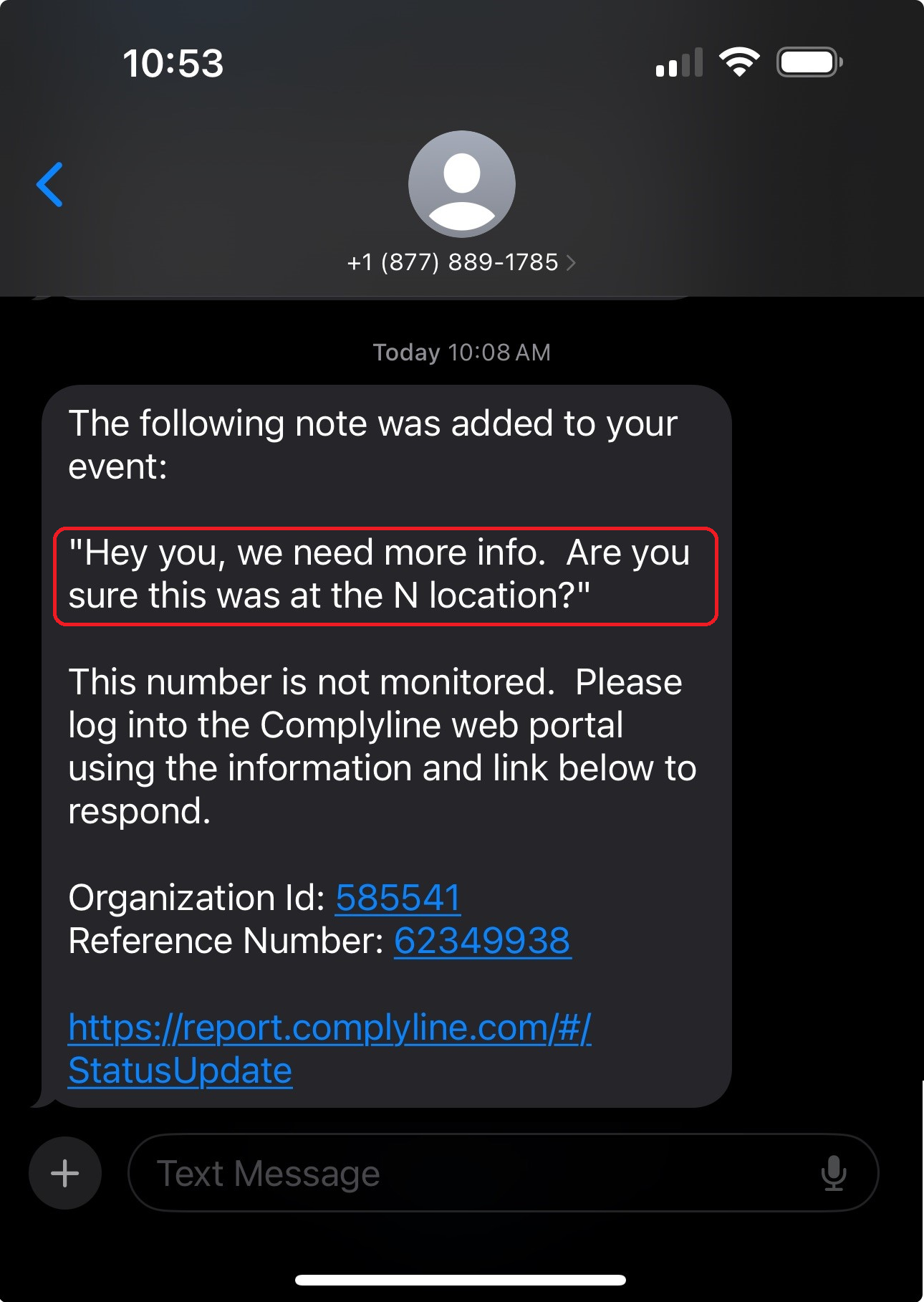
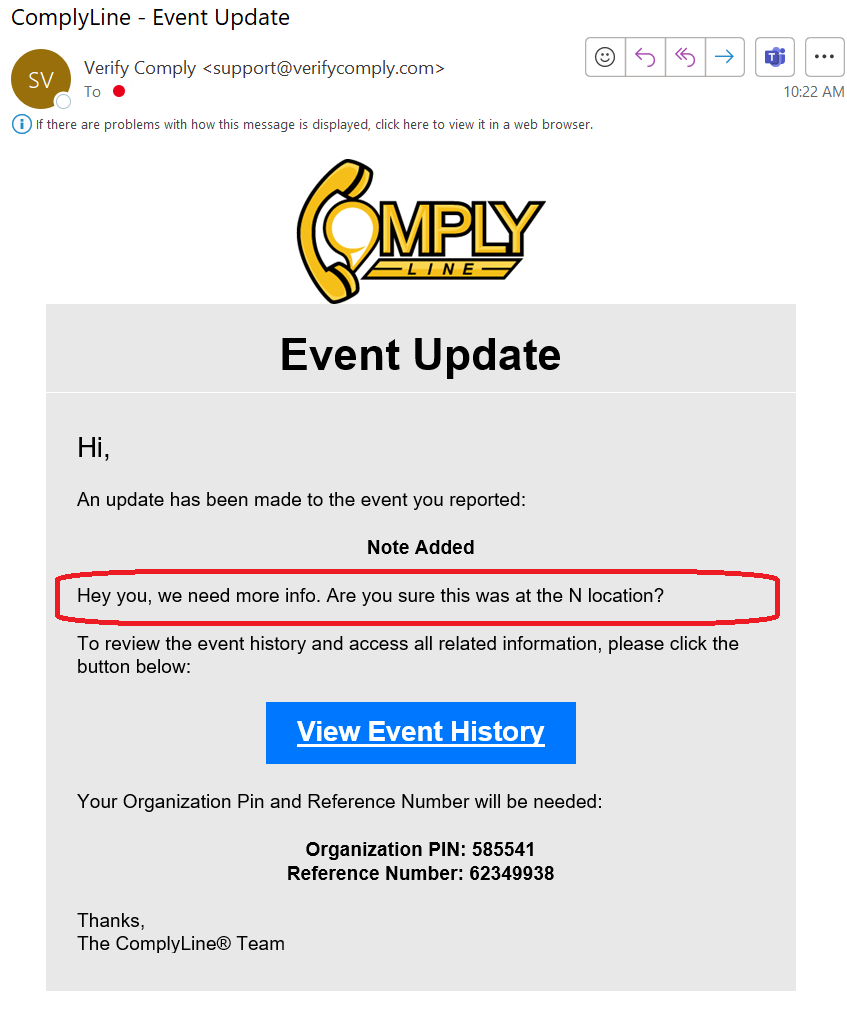
Yes! When an event is phoned in, the reporter can opt in to communicate via text message. When a reporter creates an event using the web portal, they can opt in to communicate via text message or email. Examples can be seen below:
Sure! If you'll click here and submit the form, we’ll email you the information needed to test the hotline.
Yes, if the number can be forwarded, it can be maintained.
We have an entire page dedicated to this. You can uncover the principles behind our pricing on our Why So Affordable? page.
- Encourages Ethical Behavior - Hotlines provide employees and stakeholders with a confidential way to report unethical or illegal activities, helping to promote a culture of integrity.
- Legal and Regulatory Compliance - Many industries are required by law to have whistleblower mechanisms in place (e.g., the Sarbanes-Oxley Act for public companies in the U.S.).
- Fraud Prevention and Risk Mitigation - Whistleblower reports help companies detect and address fraud, corruption, or other misconduct early, reducing financial and reputational risks.
- Confidentiality and Anonymity - Employees may fear retaliation if they report issues through normal channels; hotlines allow them to report concerns safely and anonymously.
- Protect Reputation - Addressing issues internally before they become public scandals helps companies maintain their credibility and public trust.
- Improve Workplace Culture - Employees feel safer and more valued when they know they can report concerns without fear of retaliation.
- Legal Protection for Whistleblowers - Laws in many countries protect whistleblowers from retaliation, and having a hotline helps companies comply with these protections.
- Corporate Governance Best Practices - Many investors and stakeholders expect companies to have strong governance policies, including whistleblower reporting mechanisms.
- Increase Accessibility - Different employees or stakeholders may have varying comfort levels with different reporting channels. Offering multiple options (e.g., phone hotlines, online portals, email, and physical drop boxes) ensures everyone can report in a way that works for them.
- Encourage More Reports - Some employees might feel uneasy using a particular method due to concerns about traceability. Providing multiple options reduces barriers to reporting.
- Cater to Different Situations - Some misconduct might be easier to report via written documentation (like email or web forms), while urgent matters may require a phone call for immediate response.
- Maintain Confidentiality and Anonymity - Different reporting methods offer varying levels of anonymity. For example, a third-party managed hotline might feel more secure than an internal email system.
- Reduce Fear of Retaliation - Some employees may fear that using one reporting method (such as an internal reporting system) could expose them. Multiple options help mitigate this fear.
- Comply with Legal and Regulatory Requirements - Many regulations require companies to provide secure and confidential whistleblower mechanisms. Multiple reporting methods help ensure compliance.
- Increase Trust in the System - When employees see that a company provides various ways to report wrongdoing, they are more likely to trust that their concerns will be taken seriously.
- Enhanced Credibility & Trust - Employees and stakeholders are more likely to report misconduct when they believe the system is unbiased and free from internal influence.
- Greater Anonymity & Confidentiality - External providers ensure higher levels of security and anonymity, reducing the risk of retaliation or exposure of whistleblowers.
- Reduces Internal Bias & Manipulation - Internal reporting channels may be subject to conflicts of interest, while third-party systems provide an impartial way to handle reports.
- Improves Compliance with Laws & Regulations - Many regulatory frameworks, such as the Sarbanes-Oxley Act (SOX), EU Whistleblower Directive, US Dept of Health and Human Services recommend or require anonymous reporting mechanisms that are independent of company management.
- Encourages More Reports & Early Risk Detection - Employees may be more willing to report fraud, harassment, or other unethical behavior if they trust the reporting system, leading to early detection and resolution of issues.
- Standardized & Professional Case Management - Third-party providers specialize in handling whistleblower reports efficiently, ensuring that cases are tracked, documented, and investigated properly.
- Protects Company Reputation - By proactively addressing internal issues, businesses can prevent scandals, regulatory fines, or legal battles that could damage their brand and public image.
- Global Accessibility - Many third-party systems provide multilingual support, 24/7 availability, and compliance with international regulations, making them ideal for multinational companies.